SuperBike8 – the independent bike price comparison

SuperBike8 – the independent bike price comparison
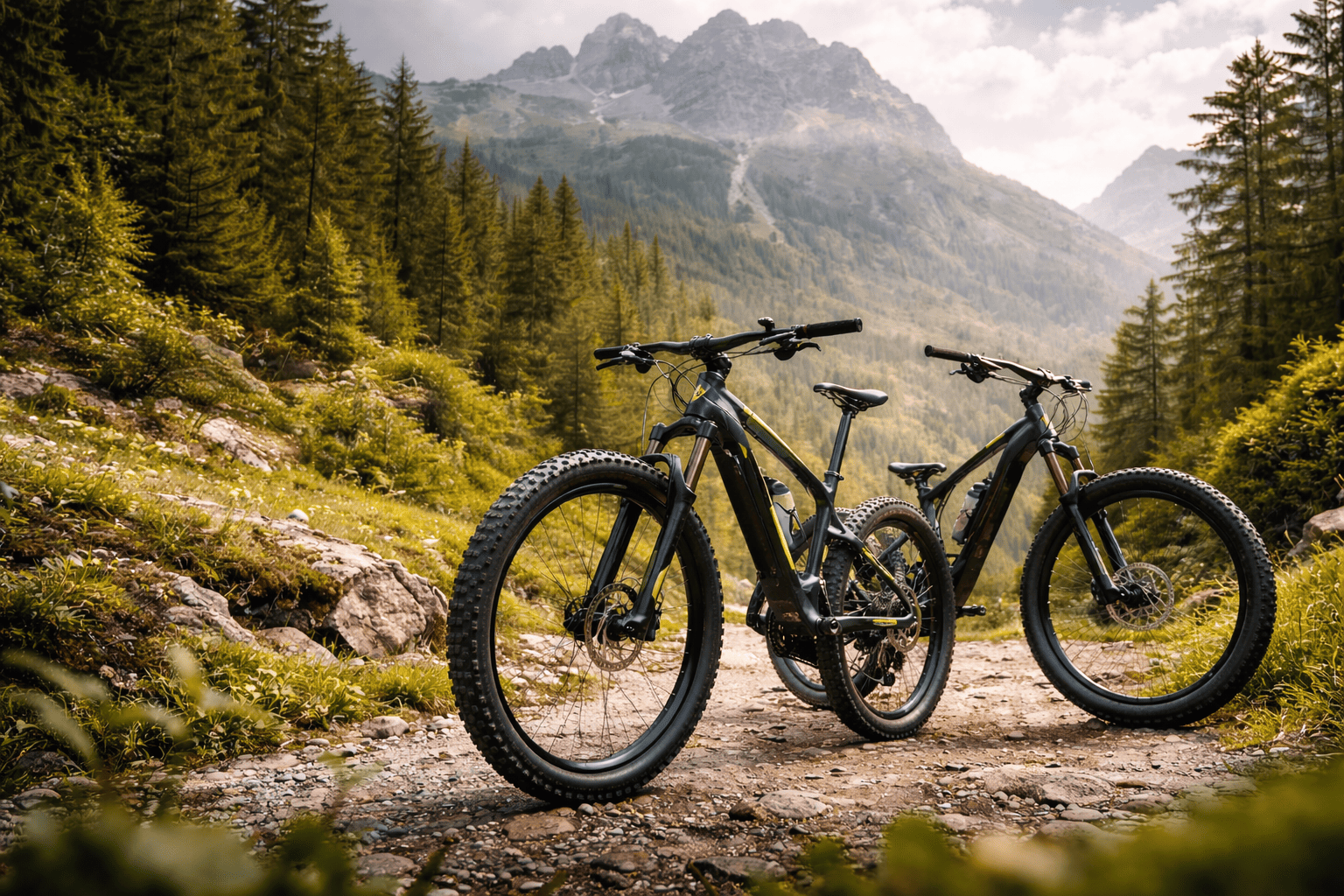
Electric Mountain Bikes

Electric mountain bikes combine trail-ready frames and components with motor assistance to help you manage climbs, longer rides and demanding terrain. The category includes hardtails with front suspension and full-suspension bikes with front and rear travel. Read more
17 offers from 2 stores
-
 Kingbull
 Hunter 2.0S – Mountain Fat Tire Electric Bike
864 Wh · 77 lbPrice range: $949.00 through $1,208.00View Details -

-
 Kingbull
 Discover ST 2.0 – Premium Off-road & City Electric Bike
Bafang · 720 Wh · 77 lbPrice range: $1,199.00 through $1,458.00View Details -
 Kingbull
 Ranger – Vintage Off-Road Electric Bike
864 Wh · 88 lbPrice range: $749.00 through $1,008.00View Details -
 Kingbull
 Hunter 2.0 – Mountain Fat Tire Electric Bike
Bafang · 720 Wh · 70 lb$949.00View Details -
 Kingbull
 EX Titan – Premium Full Suspension Electric Mountain Bike
Bafang · 960 Wh · 84 lb$1,958.00View Details -
 Kingbull
 Jumper Go – 20″ Full Suspension All Terrain Electric Bike
Bafang · 960 Wh · 20" · 81 lb$1,508.00View Details -
 Kingbull
 Discover2.0 – Premium Off-road & City Electric Bike
Bafang · 720 Wh · 77 lb$1,458.00View Details -
 Kingbull
 Rover 2.0 – All-Terrain Off-Road Electric Bike
Bafang · 720 Wh · 80 lbPrice range: $1,299.00 through $1,558.00View Details -

The right choice depends on where you ride, how technical the trails are, and whether you prioritize lower weight and simplicity or additional rear-wheel control and comfort.
Motor system, battery capacity, suspension design, geometry and component specification all affect how an e-MTB rides. A powerful-feeling motor is not automatically the best match: support modes, battery use, handling and serviceability matter too. Fit is equally important. Frame labels are not standardized across manufacturers, so compare geometry and sizing guidance rather than relying on a size name alone.
On SuperBike8 you can compare electric mountain bikes and available retailer offers. The category currently includes 10 products, and prices or available configurations can change. Check that the offer is for the exact model, size and color you want. After choosing an offer, you continue to the retailer; ordering, payment, shipping, returns, warranty and customer service are handled directly by that retailer.
Choose the right electric mountain bike type
The main frame decision is between a hardtail and a full-suspension e-MTB. A hardtail has a suspension fork but no rear shock. Its simpler frame can be easier to clean and maintain, and often suits smoother trails, dirt roads and riders who value straightforward handling. A full-suspension bike adds rear-wheel suspension, which can improve traction and control on rough or technical trails. It also adds moving parts and requires attention to suspension setup and maintenance.
Full-suspension electric mountain bikes are available in the Full-Suspension E-MTBs category. Compare the design and intended riding use, not just the presence of a rear shock: suspension layout, geometry and component quality vary by model.
| Bike type | Often makes sense for | Trade-offs to consider |
|---|---|---|
| Hardtail e-MTB | Smoother trails, dirt roads, and riders who prefer a simpler suspension setup | The rear wheel has no suspension, so rough terrain can feel less forgiving and may require more rider input |
| Full-suspension e-MTB | Rougher trails, repeated impacts, and riders who want rear-wheel suspension and added traction | More components to set up and maintain; suspension design and added equipment can affect weight and price |
If most of your riding is on paved streets or you need a bike for errands rather than trails, compare other e-bike styles as well. SuperBike8 also lists Electric City & Commuter Bikes, Electric Cargo Bikes, Folding E-Bikes and Other E-Bikes. For the wider selection, see E-Bikes.
Motor assistance, battery and ride feel
Electric mountain bikes use a motor and battery to provide assistance, but systems differ in how naturally they respond, how much support they offer and how their controls work. Some systems respond closely to your pedaling input; others can feel more assertive. Compare the available assistance modes, control display, adjustment options and the manufacturer's service support. If possible, a test ride can help you judge whether the motor's response suits your riding style.
Battery capacity is only one factor in how far you can ride before recharging. Actual range depends on terrain, climbing, rider and cargo weight, temperature, tire choice, assist level, speed and battery condition. Frequent steep climbs or high assistance can use energy faster than steady riding on flatter routes. Treat any range estimate as dependent on its stated conditions, and consider the routes you actually ride rather than expecting a single number to apply everywhere.
Check how the battery is installed and charged. Some batteries can be removed for charging; others are primarily charged on the bike, and arrangements can vary by model. Consider whether you have a convenient charging location, how you will store the bike, and what the manufacturer recommends for long-term battery care. A larger battery may suit longer or hillier rides, but it can add weight and may not be worth prioritizing if your rides are short and charging is convenient.
In the United States, e-bike class labels commonly distinguish pedal-assist and throttle operation, as well as assistance speed. Class 1 generally provides pedal assistance up to 20 mph; Class 2 can include throttle assistance up to 20 mph; and Class 3 generally provides pedal assistance up to 28 mph. Definitions, equipment requirements and access rules can vary by state and location. Check applicable local laws and trail rules before riding, since a trail may restrict certain e-bike classes even when the bike is legal on public roads.
Suspension, tires and trail handling
Suspension should match the terrain, not just the most demanding ride you might do occasionally. A hardtail can be a practical choice for smoother routes and moderate trails, while a full-suspension bike can help keep the rear wheel in contact with uneven ground. Rear suspension does not replace good technique, suitable tires or correctly adjusted suspension. If a bike has adjustable settings, learn what each control does and follow the manufacturer's setup guidance.
Tire width, tread and casing affect grip, comfort and rolling behavior. More aggressive tread can help on loose or muddy ground but may roll less efficiently on pavement. A stronger casing can be useful for rough trails, although tire construction adds weight. Confirm the tire size and clearance for the exact model before planning a change: frame and fork limits vary, and a tire that fits one e-MTB may not fit another.
Wheel size and geometry also influence handling. Models may use 27.5-inch or 29-inch wheels, or a mixed-wheel setup. Larger wheels can roll over trail obstacles differently from smaller ones, but wheel size alone does not determine whether a bike will feel stable or maneuverable. Reach, wheelbase, head angle, handlebar width and your position on the bike all contribute. Compare complete geometry and, when possible, ride the bike on terrain similar to your usual trails.
Frame size and fit
Do not assume that a medium from one brand fits like a medium from another. Manufacturers use different sizing systems and frame proportions, and even the same size label can produce a different riding position. Start with the maker's size chart and use your height and, when requested, inseam measurement. If you are between sizes, compare reach and stack as well as the chart's recommendations.
Reach describes the horizontal distance from the bottom bracket area to the head tube, while stack describes the vertical height to the head tube. These measurements help explain cockpit length and front-end height, but they are not a complete fit prescription. Handlebar and stem choices, saddle position and your proportions also matter. A frame that is too large can feel difficult to maneuver; one that is too small may feel cramped or put too much weight forward. Because e-MTBs are heavier than many unassisted mountain bikes, confident control at low speed and on technical sections is especially useful.
Components, durability and maintenance
Brakes deserve particular attention because an e-MTB may be heavier and ridden at higher speeds than a non-electric mountain bike. Compare the brake system, rotor sizes and the manufacturer's intended use, but do not assume that a larger rotor or a higher component tier guarantees the best match. Rider weight, terrain, riding intensity and compatibility all matter. Replacement brake parts must match the specific system.
Gearing, drivetrain range and component compatibility also affect everyday use. A wide-range cassette can help on steep climbs, while close gear steps may feel more consistent on less varied terrain. Check the drivetrain specification and replacement-part compatibility before assuming a different cassette, chain or crank will fit. E-bike systems can have manufacturer-specific components and service requirements, so availability of qualified service may be an important buying factor.
Regularly inspect tires, brakes, chain and suspension, and follow the bike and motor manufacturers' service schedules. Keep the battery and electrical connections clean and dry according to the instructions; avoid pressure washing electrical components or suspension seals. Ask the retailer what assembly is required on delivery and what support is available for initial setup. Bikes may ship partially assembled, and the exact preparation offered depends on the retailer.
Compare e-MTB offers accurately
Retailers may list different prices for the same model, while colors and sizes can be discounted differently. Previous-year models or older colorways may cost less and can still be a sound choice, but do not assume that two bikes with similar names have identical specifications. Manufacturers can revise motors, batteries, suspension, components or frame details between model years.
On SuperBike8 you can compare available products and retailer offers, then continue to the retailer for the offer you choose. Check the exact model year, frame size, color, motor and battery configuration, and component specification before comparing prices. Shipping costs and sales tax can affect the total amount. Also review the retailer's delivery, assembly, returns and warranty terms directly; these are handled by the retailer, not SuperBike8.
Typical buying mistakes with electric mountain bikes
- Choosing a bike based on motor power or battery capacity alone without considering fit, handling and actual ride length.
- Buying a full-suspension model for mostly smooth paths when a simpler hardtail would better suit the use and maintenance preference.
- Choosing a hardtail for consistently rough trails without considering the comfort and traction benefits rear suspension may provide.
- Assuming a frame size label is consistent across brands instead of checking the manufacturer's chart and geometry.
- Expecting a battery range estimate to apply regardless of terrain, assist level, rider weight or weather.
- Ignoring local e-bike class rules or trail-access restrictions.
- Comparing offers with different model years, colors, sizes or component specifications as if they were the same configuration.
- Planning a tire, wheel or drivetrain upgrade without checking frame clearance and component compatibility.
- Overlooking brake condition, replacement-part availability or access to service for the motor system.
- Forgetting to account for shipping, sales tax, assembly requirements and the retailer's terms when comparing offers.
Three typical buying decisions for Electric Mountain Bikes
1. You ride smoother trails and want a straightforward setup
Compare hardtail e-MTBs with a suspension fork, suitable tires and a motor system that feels manageable on your usual climbs. A simpler frame may suit your priorities if you do not regularly ride rough terrain. Check fit, battery charging arrangements and the intended use of the components rather than paying for rear suspension you are unlikely to use.
2. You regularly ride rough or technical trails
Look closely at full-suspension e-MTBs, including the suspension design, geometry, brakes and tire setup. The extra rear suspension can help with traction and control over repeated bumps, but the bike needs appropriate setup and ongoing maintenance. Confirm that the model's fit and handling suit your trails and that service for its motor and suspension is accessible to you.
3. You take longer rides with sustained climbing
Prioritize a battery configuration and assistance system suited to your route, while remembering that range changes with terrain, weather, rider load and assist level. Compare battery charging options and the available modes, and consider whether a heavier battery is worthwhile for your normal rides. Check fit and climbing control too: extra capacity is less useful if the bike's position or handling does not work for you.
Your checklist before you order
- Does the bike suit the trails, climbs and riding conditions you use most?
- Is a hardtail or full-suspension setup the better match for your terrain and maintenance preferences?
- Have you checked the manufacturer's size chart and relevant frame geometry?
- Does the motor's assistance behavior and control system suit your riding style?
- Are the battery capacity and charging arrangement practical for your usual rides?
- Have you checked the e-bike class and local road or trail-access rules?
- Are tire size, tread and clearance appropriate for your terrain?
- Do the brakes and drivetrain match your intended riding and expected maintenance?
- Have you checked service access and replacement-part compatibility for the motor system?
- Are the model year, color, frame size and component specifications identical across the offers you are comparing?
- Have you included shipping costs and sales tax when assessing the total price?
- Have you reviewed the retailer's assembly, delivery, return, warranty and service terms?
- Do you understand that ordering and payment take place with the selected retailer?
Frequently asked questions about Electric Mountain Bikes
What is the difference between a hardtail and a full-suspension e-MTB?
A hardtail has front suspension but no rear shock. A full-suspension e-MTB has suspension at both ends and can provide additional rear-wheel traction and comfort on rough trails. The better choice depends on terrain, riding style, fit and how much maintenance you are willing to perform.
How far can an electric mountain bike travel on one charge?
There is no single range that applies to every ride. Terrain, elevation, rider and cargo weight, temperature, assist mode, tires and battery condition all affect energy use. Compare battery information and range estimates under their stated conditions, then consider your own routes and charging options.
Which electric mountain bike size should I choose?
Use the specific manufacturer's sizing chart rather than relying on a general size label. Brands differ in frame proportions, so compare the recommended rider measurements and geometry, including reach and stack where available. If you are between sizes, a test ride or advice from a knowledgeable bike shop can help.
Can I ride an e-MTB on any mountain bike trail?
Not necessarily. Access depends on the trail manager and applicable state or local rules, and restrictions can differ by e-bike class and location. Check the trail's current regulations before riding, even if your bike is permitted on public roads.
Are previous-year electric mountain bikes worth comparing?
They can be worth considering, especially if an older colorway or model year is offered at a lower price. Compare the exact specifications: similar model names do not guarantee the same motor, battery, suspension or components. Check the retailer's listing carefully before comparing it with a newer version.
Who handles payment, shipping and warranty after I choose an offer on SuperBike8?
SuperBike8 is a price comparison site. When you choose an offer, you continue to the retailer, which handles ordering, payment, shipping, returns, warranty and customer service under its own terms.